
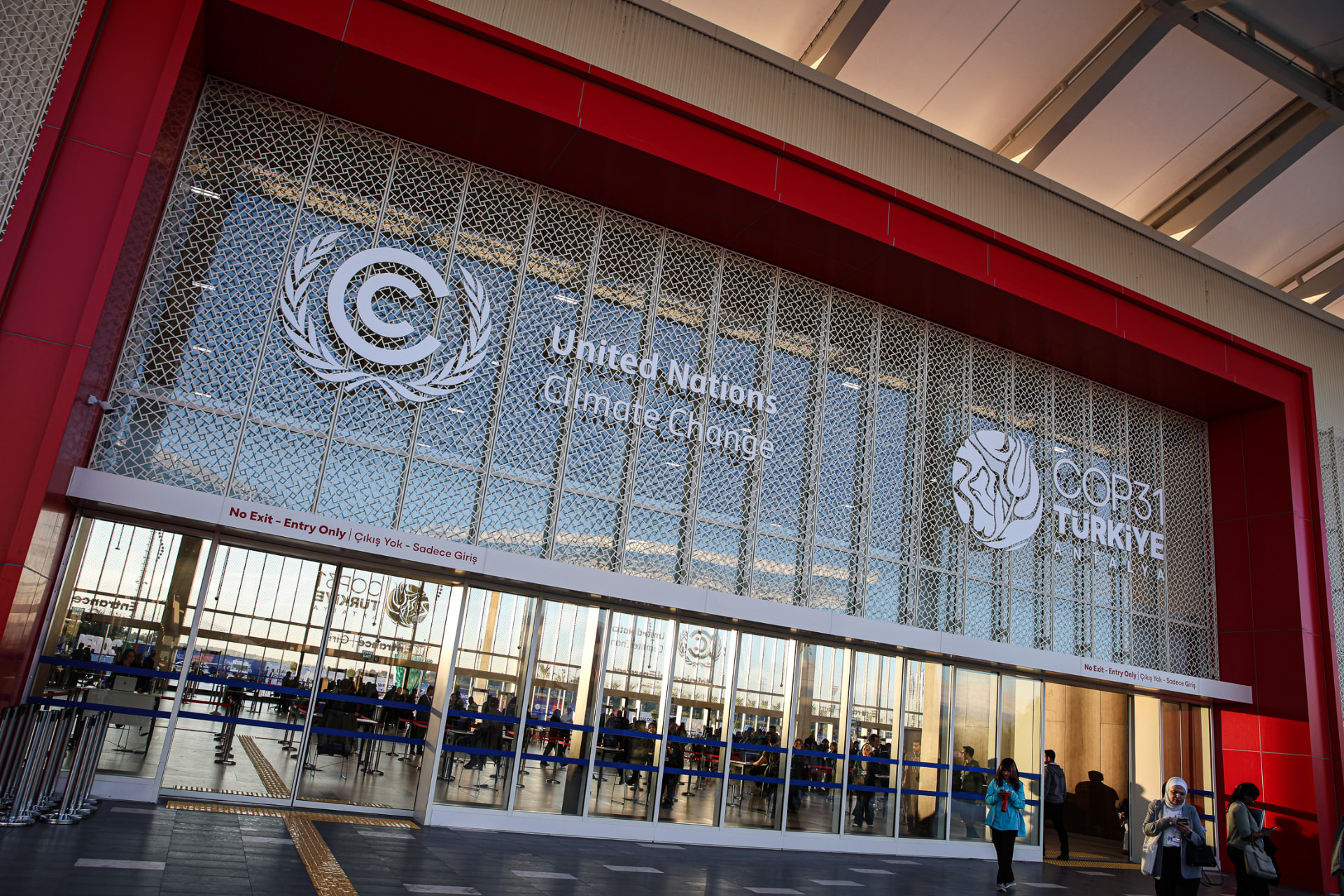
COP31 ended in Antalya on 22 November with no agreed outcome. The EU, the UK, Panama and others rejected the final draft from the Turkish and Australian presidents as too weak, and COP31 President Murat Kurum said there would be no new text. Reuters reports that the last time UN climate talks failed to produce a deal adopted by all countries was Copenhagen in 2009.
A year ago I argued that investors should keep watching COPs even when they disappoint. This one is harder to wave away than most. Here is what failed and what it changes for anyone allocating capital to the transition.
Why this matters for investors: COP31 sent no new global policy signal, so returns in the transition will depend far more on national policy, private capital and the pricing of physical risk than on summit outcomes. Anyone positioned for a global fossil fuel mandate should rethink that, and anyone treating 1.5°C as achievable should plan for overshoot.
What actually happened in Antalya?
The draft got weaker as the deadline got closer. Monday's first text contained two references to fossil fuels and limiting their use. Thursday's slimmed-down version removed both, along with a proposed $120 billion adaptation finance target. Coal, oil and gas were not named at all in the nine-page text.
The presidencies defended the change. Australia's Chris Bowen, who ran the negotiations, said the COP was about implementation. Kurum argued that the presidency's 35-by-35 electrification goal (electricity at 35% of final energy use by 2035) already implies moving away from fossil fuels.
Island nations refused to sign the text. The Bahamas' prime minister, Philip Davis, pointed out that countries had agreed by consensus in Dubai in 2023 to transition away from fossil fuels, as CNBC reported.
The talks ran two days past their Friday deadline. On Sunday the EU, the UK and Panama said they could not accept the final text, as CNBC reported. Ireland's climate minister, Darragh O'Brien, called it unconscionable for a climate decision to omit fossil fuels entirely.
One element was new: it was the first draft COP cover decision to acknowledge that temperatures are on course to overshoot 1.5°C, as Reuters reported, and it called for faster development of carbon dioxide removal to bring them back down. Greenpeace's delegation head, Jasper Inventor, said the carbon removal language opens the door for the fossil fuel industry to keep ramping up production. Observers told Reuters that Saudi Arabia and other big oil producers pushed hard for a text that left out explicit mention of fossil fuels.
What does the record of 31 COPs show?
Set against three decades of data, Antalya fits a long pattern:
- COP28 in Dubai (2023) was the first of the 31 COPs to call for "transitioning away from fossil fuels in energy systems" (paragraph 28(d) of the global stocktake decision). COP30 left fossil fuels out of its final text, and the final COP31 draft did the same.
- Global greenhouse gas emissions reached 54.1 GtCO₂e in 2025, 68.5% above 1990, according to the EU's EDGAR database.
- Atmospheric CO₂ is up about 16%, from 360 ppm in 1995 to 419 ppm in 2023, the latest year in NOAA's global series.
Atmospheric CO₂ rose every year of the COP era
CO₂ rose from 360.17 ppm in 1995 to 419.31 ppm in 2023.
Do COPs still matter after this?
I think so, and Antalya tests the argument I made in Why COPs Still Matter Even When They Disappoint. That piece said summits matter for the pressure and direction they create, while real progress increasingly comes from markets, courts, regulators and cities. It also proposed five reforms, starting with enforceable, time-bound targets and a rethink of consensus rules.
Three things stand out a year on.
- Consensus cut the other way. At COP30 a package with no fossil fuel language was still adopted. At COP31 the EU, the UK and Panama declined to accept a text they judged too weak. That is arguably more honest than waving through another empty decision, but it leaves nothing agreed to build on.
- The coalitions did the real work. The presidency's voluntary 35-by-35 pledge, which would lift electricity's share of final energy use from about 23% to 35% by 2035, had 75 countries behind it before the final weekend, and by the close Chris Bowen said more than 90 countries had signed, as CNBC reported. A new Electrify Now Finance Coalition aims to mobilise $1.2 billion for clean electricity in developing countries. Because these are voluntary, the plenary's failure does not undo them. That is the non-state and coalition track I argued for last year.
- The old commitments still stand. Reuters notes that failing to agree a political declaration does not erase obligations from earlier summits or the legal and technical frameworks beneath them. COP28's transition-away language remains the agreed position.
The first thing on my reform list, targets with dates and penalties attached, never made it into the Antalya text.
What should investors take from it?
Investors were already looking past the summit. Chris Dodwell, co-head of the sustainability centre at Impax Asset Management, told Reuters that COP decisions no longer move investment signals the way they once did: "the economics have taken over and are driving the transition." Before the talks collapsed, the Net-Zero Asset Owner Alliance, which represents 85 institutional investors managing US$10.5 trillion, welcomed the presidency's focus on implementation. It asked governments to turn national pledges into investable sector pathways, to remove the specific barriers holding capital back, and to build adaptation plans into investment frameworks. IIGCC's chief executive made the same point before the summit: investors need clear, stable policy and fiscal frameworks before they commit capital.
Energy and clean energy have already diverged. The energy ETF XLE is up about 38% in price so far this year, according to Yahoo Finance data to 20 November, while the clean energy ETF ICLN is down about 11% on a NAV total return basis, according to iShares data to 19 November.
- The plenary produced no new global mandate on fossil fuels, so there is no signal to price. What matters for valuations is what national governments, regulators and procurement bodies do next, and that is where the 35-by-35 roadmaps will be tested.
- Plan for overshoot. With the draft text itself acknowledging that 1.5°C is on course to be exceeded, physical risk belongs in base-case assumptions. At a COP31 session hosted by the WEF and KPMG, Zurich Insurance launched a playbook urging finance chiefs to treat physical climate risk like any other threat to enterprise value.
- Expect adaptation to rely on private capital. The $120 billion adaptation finance target was dropped from the draft, and UN findings released just before the opening showed requests for loss and damage support exceeded available funds eightfold. That leaves private capital to fill the gap.
- Read the carbon removal language carefully. Faster removal is a legitimate part of a net-zero pathway, but it is not a substitute for cutting emissions. Watch how producers use it.
- Follow the coalitions. The Electrify Now Finance Coalition and the IEA's Global Electrification Tracking Mechanism are more likely to produce investable detail than the plenary was.
The next summit is COP32, to be hosted by Ethiopia in 2027. The IEA will also lead a Global Electrification Tracking Mechanism, so watch what it reports on the 35-by-35 pledge.
Where does this leave us?
COP31 fits the view I set out last year. The negotiating room still cannot bring itself to name fossil fuels, while the people building the transition are getting on without it. Investors need both readings: the summit shows how far the formal process has stalled, and the coalitions and national plans show where capital is going.
I will still read each COP's outcome, but I now put more weight on the coalitions, the national roadmaps and the money behind them.
Sources
- COP31 climate talks set to collapse as EU and others reject deal (Reuters via ThePrint, 22 Nov 2026)
- COP31 climate talks collapse without agreement as EU rejects final draft (Ynet, 22 Nov 2026)
- Fossil fuels scrubbed from draft UN climate deal (AFP via eNCA, 19 Nov 2026)
- COP31 negotiators publish revised deal text with no mention of fossil fuels (bdnews24, 19 Nov 2026)
- Latest draft no longer mentions fossil fuels (To Vima, 19 Nov 2026)
- COP31 opens with mounting climate warnings, persistent divisions (To Vima, 9 Nov 2026)
- 75 countries back Türkiye's global electrification target (Anadolu Agency)
- COP31 starts a new era of electrification (Down To Earth)
- COP31: Climate risk must reach the boardroom (OPIS)
- Why COPs Still Matter Even When They Disappoint (Transition Investing, Nov 2025)
- NOAA Global Monitoring Laboratory, global annual mean CO₂
- EDGAR, GHG emissions of all world countries, 2026 report (EU Joint Research Centre)
- COP31 presidency unveils 35% global electrification goal for 2035 (New Energy World, 15 Jun 2026)
- Analysis: Can climate diplomacy build on the collapse of COP31? (Reuters via Investing.com, 22 Nov 2026)
- 'Worst COP ever': Climate talks collapse after draft deal fails to include fossil fuels (CNBC, 23 Nov 2026)
- Draft cover decision, version of 19 Nov 2026 (UNFCCC)
- COP31: Cover decision draft drops fossil fuel phaseout language, retains '35 by 35' electrification target (Down To Earth)
- COP31: NZAOA calls for three shifts to turn commitments into implementation (UNEP FI, 19 Nov 2026)
- IIGCC at COP31 (IIGCC)
- State Street Energy Select Sector SPDR ETF (XLE) (Yahoo Finance, performance to 20 Nov 2026)
- iShares Global Clean Energy ETF (ICLN) (iShares, NAV total return to 19 Nov 2026)
- Transitioning Away from Fossil Fuels Roadmap (COP30 Presidency, quoting paragraph 28(d) of the first global stocktake decision)
- Whose Transition? Unpacking the discourse on transitioning away from fossil fuels (CEEW, Nov 2026)
- U.N. Climate Talks End Without Plan to Wean Off Fossil Fuels (Yale Environment 360, COP30)
- COP31 draft drops fossil fuel language as talks near deadline (Reuters via Devdiscourse, 19 Nov 2026)
- Ethiopia to host COP32 climate summit in 2027 (Reuters via The Star, 11 Nov 2025)